
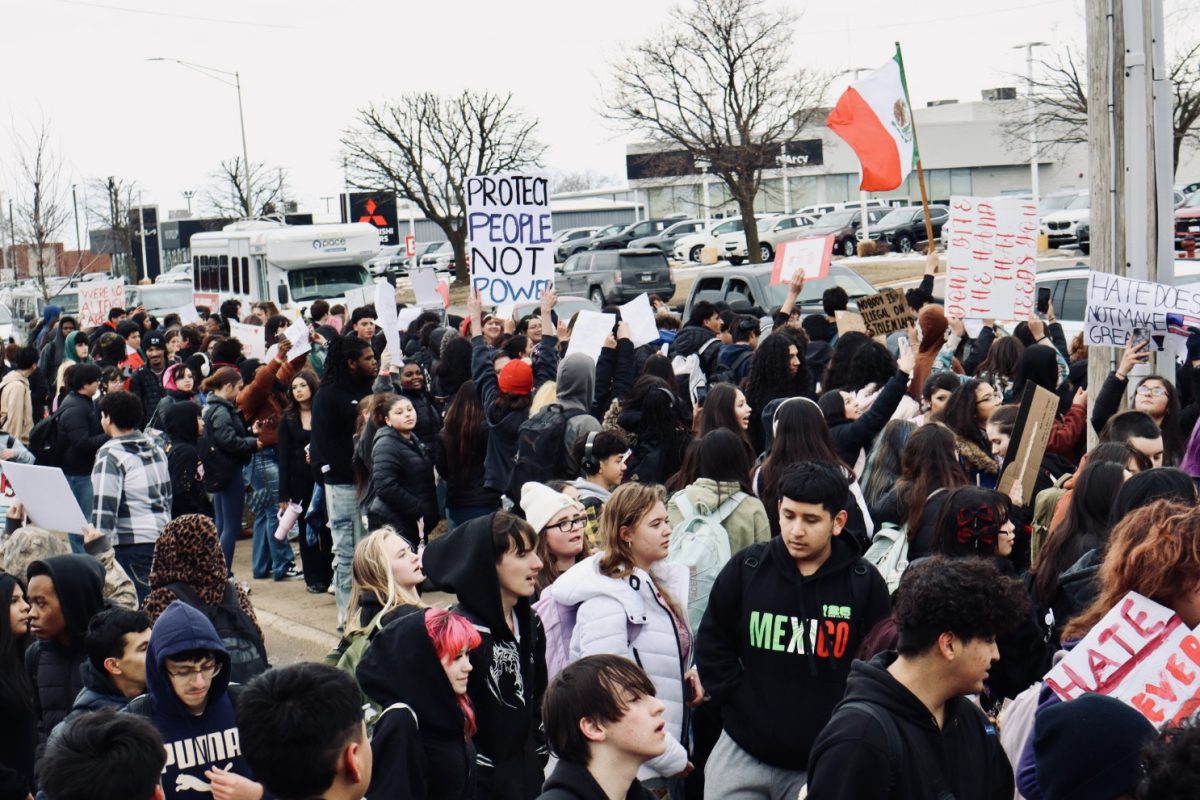
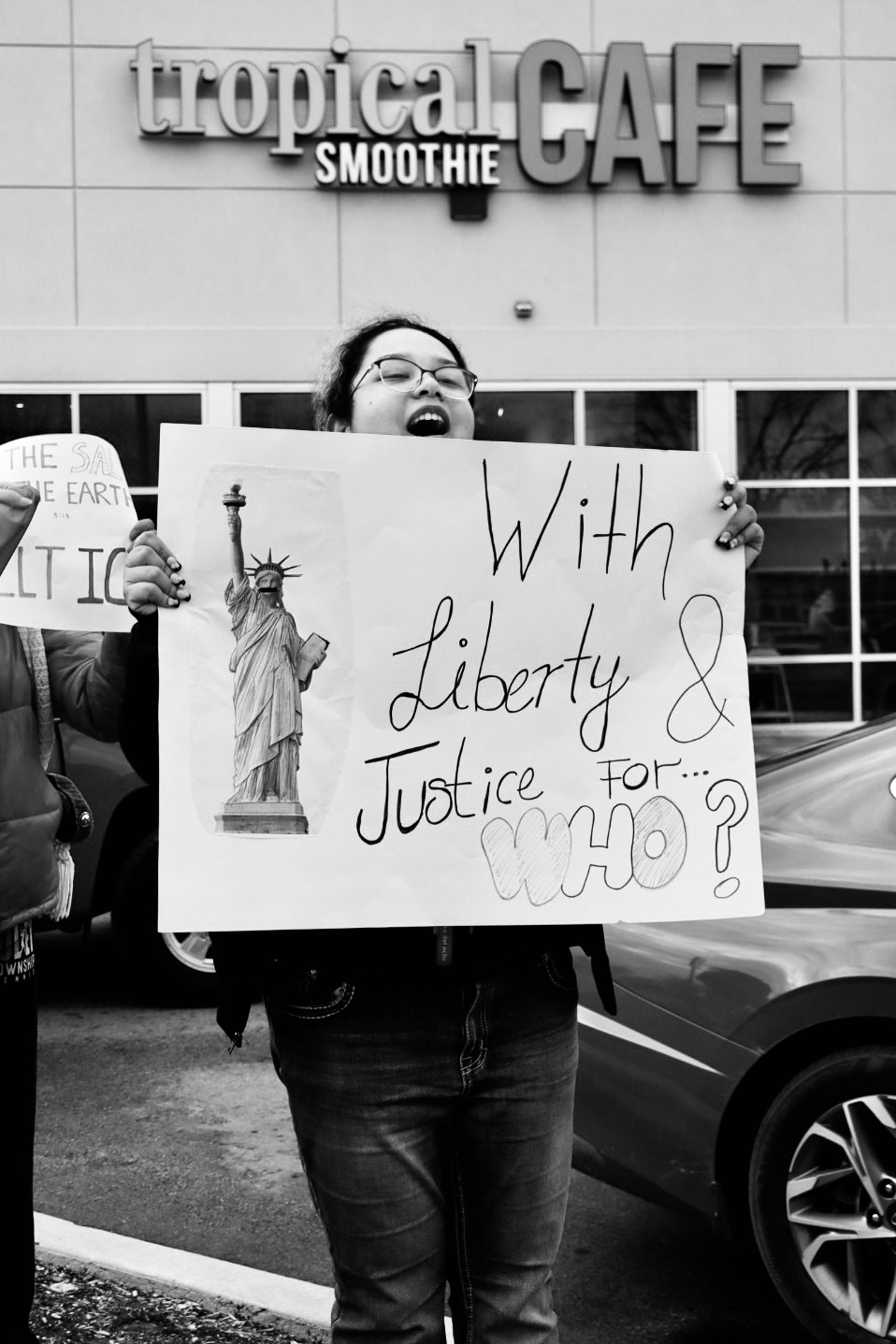
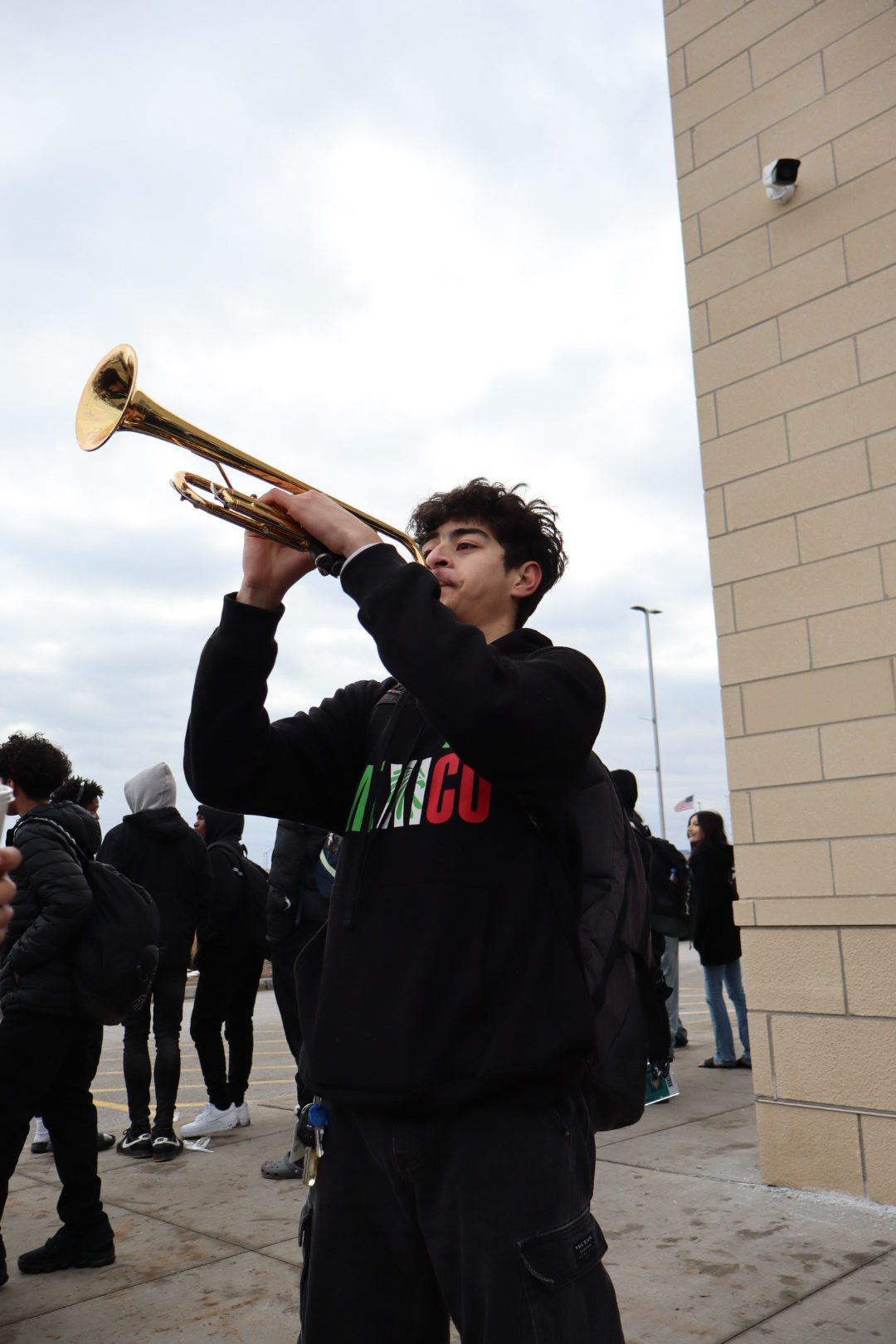
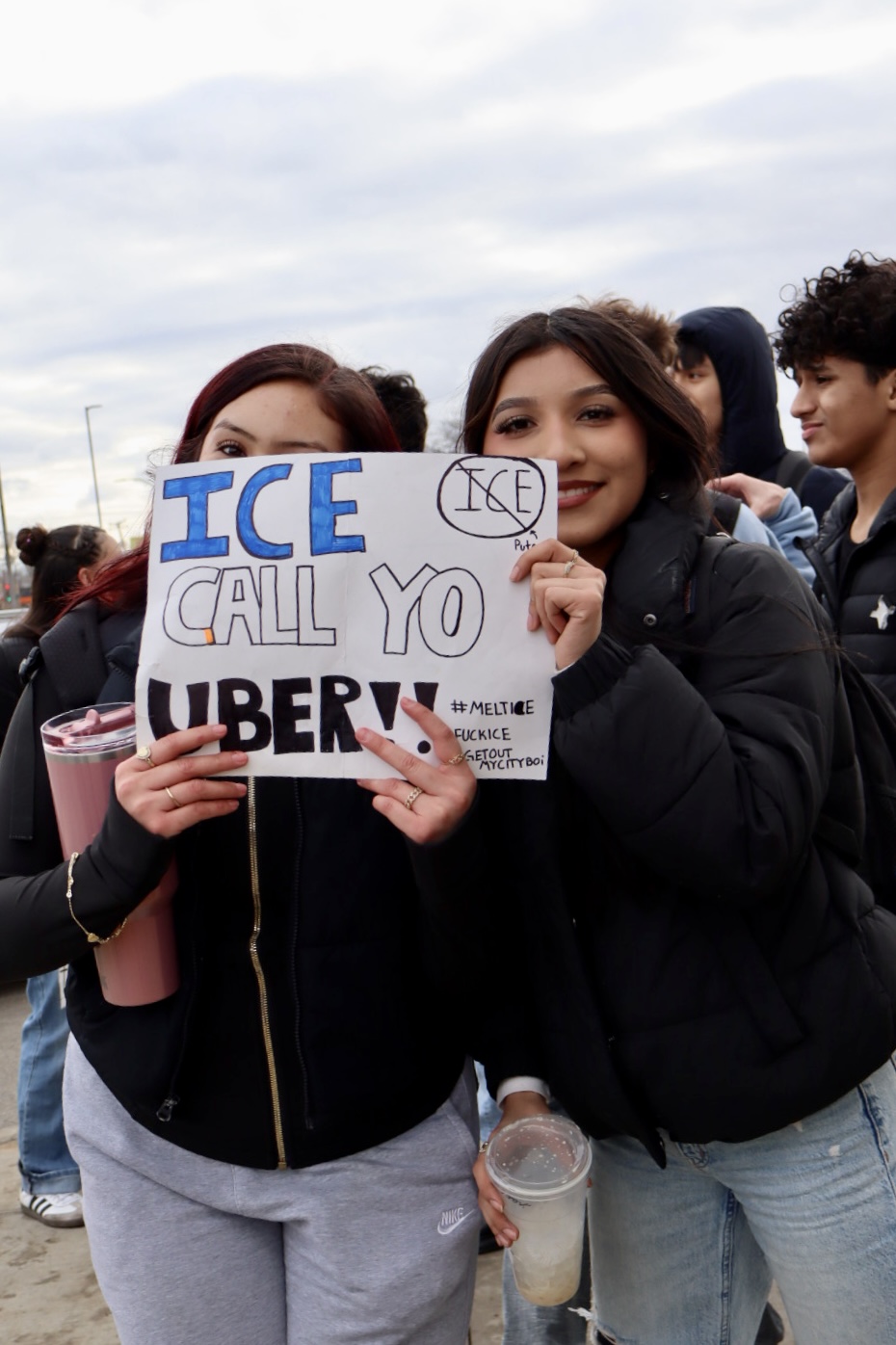
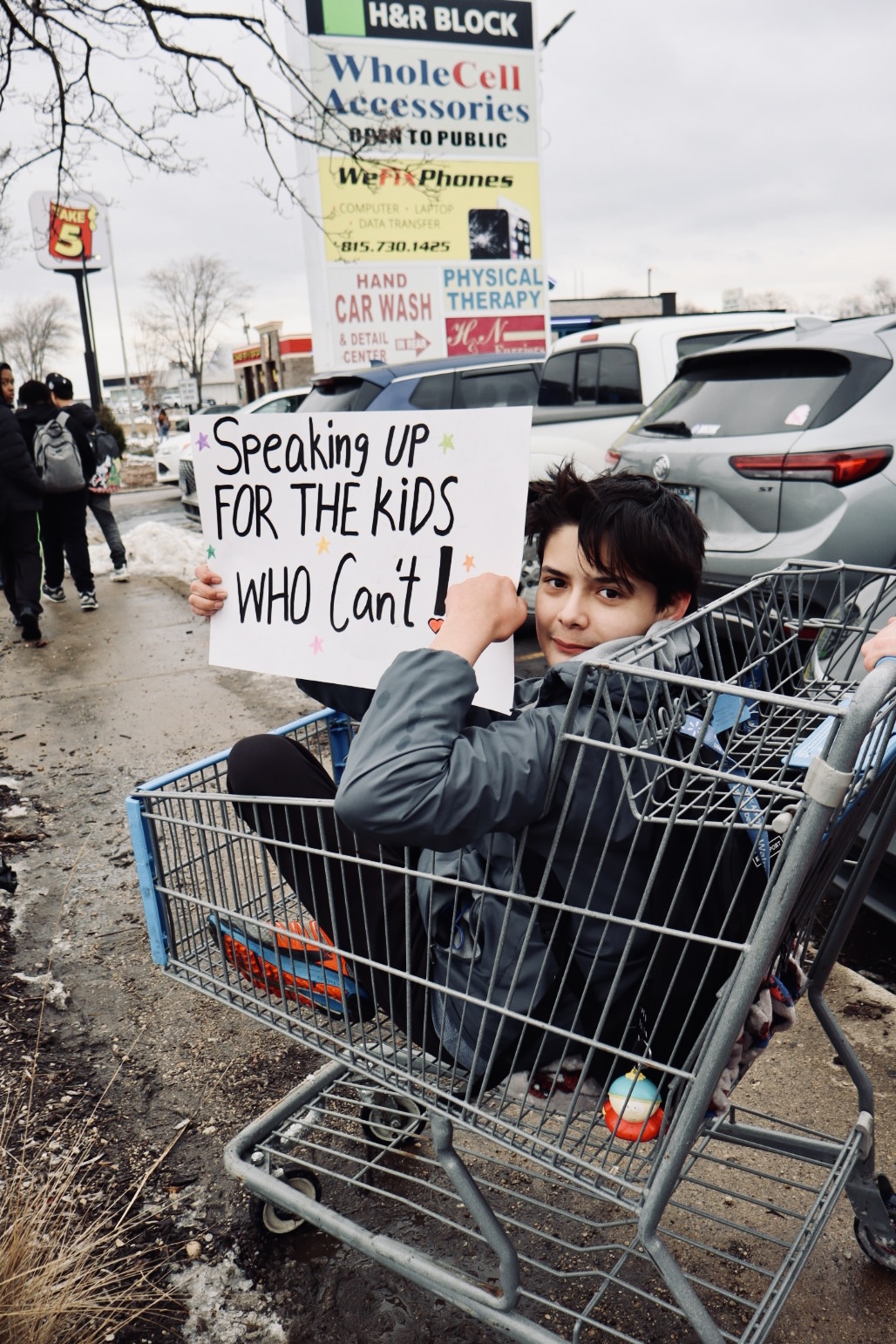
 What began as a mass exodus from classrooms has turned into a community-wide conversation on safety, policy, and the power of student voices. On February 6, hundreds of students from Joliet West High School joined a national wave of activism, walking out of their 7th and 8th-period classes to protest U.S. Immigration and Customs Enforcement (ICE) policies. The demonstration saw West students march down Larkin Avenue to Jefferson toward Walmart, with their peers from Joliet Central, eventually filling the streets near the Will County Courthouse with homemade signs and flags.
Prior to the planned walkout, Joliet West administration sent the following
message, “Students will not be disciplined for engaging in an act of protest; however, walking out during school hours is a violation of the rules. Students are subject to consequences equal to the rules that are violated while protesting.“
Students have the right to protest. At the same time, Joliet West is committed to maintaining a safe and respectful environment for all students, regardless of their views.
The events in Joliet mirror a massive surge in student-led activism that has swept across the country throughout early 2026. Dubbed the “National Shutdown” or “ICE Out” movement, these demonstrations were largely catalyzed by the January deaths of two civilians, Renée Good and Alex Pretti, during federal enforcement actions in Minneapolis.
The fallout from the protest took a sudden turn. Originally, the administration issued lunch detentions for February 13 to all students with unexcused absences. However, in an email sent to parents and students the day before, school officials announced a reversal.
The “punitive” lunch detention has been replaced with a mandatory attendance presentation during Advisory periods. According to the Dean’s office, the shift aims to move away from punishment and toward a discussion on “accountability and the importance of school safety” when students are in unauthorized areas.
“This time will be used to ensure everyone understands the “why” behind our attendance policies and how unauthorized absences affect the school community as a whole,” a quote taken from the parentsquare message sent out. For the students involved, the walkout was less about missing class and more about the anxiety felt within their own community.
Courtesy Griffin, senior shared, “It was a great movement to speak out about the wrong that is happening with ICE. It gives the students a voice, not just adults.”
Krystal Venegas, freshman shared, “I feel that it is un-fair that students are getting penalized for doing something that is their right.”
The protest was sparked by a growing fear regarding local immigration enforcement and its impact on families in the Joliet area. While the school administration maintains that they must balance student expression with campus safety protocols, the movement highlights a generation of students increasingly willing to face disciplinary consequences to engage in civic action.
LiviaAnn Wysocki, a freshman, who participated in the walkout and attended one of the presentations stated, “The presentation focused on how Joliet West is a closed campus and how attendance matters.”
While Joliet West students now face educational “Advisory” sessions, their peers across the nation are navigating a similar patchwork of consequences, ranging from total administrative support to three-day suspensions or three-hour detentions. Despite the risk of discipline, the movement signals a shift in youth civic engagement, with student organizers using social media to coordinate strikes across state lines in real-time.
Marches and walkouts like these continue to be held in communities and cities across the nation.